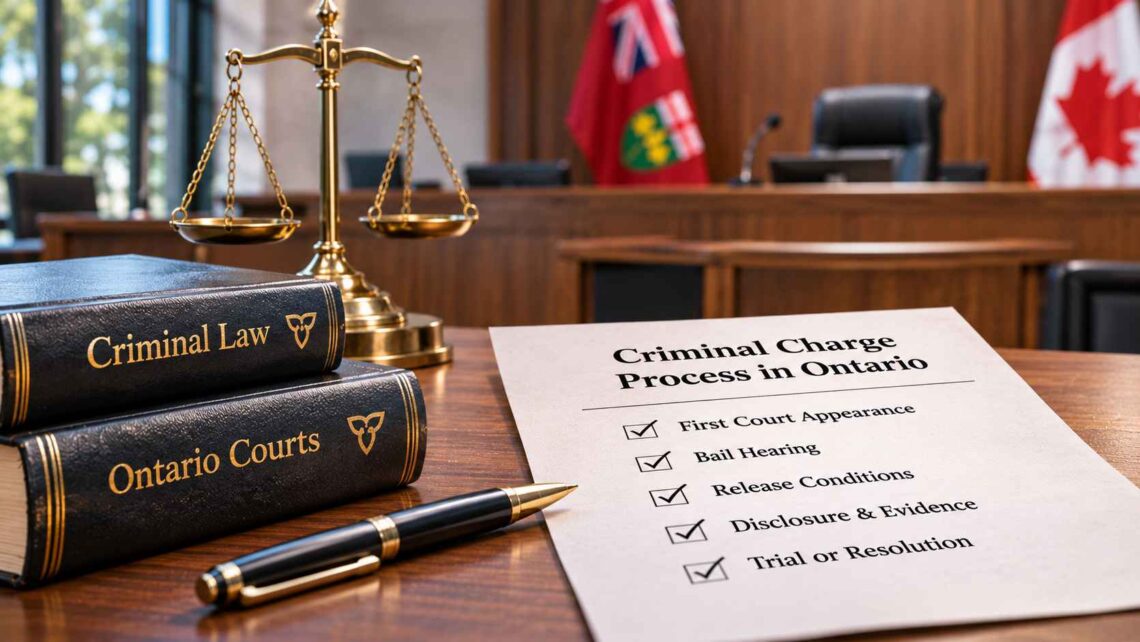
Being charged with a criminal offence in Ontario can be an unfamiliar and stressful experience. Many people have questions about what happens after police become involved, when they must attend court, and how the legal process may affect their everyday lives.
Ontario’s criminal justice system follows established procedures designed to examine allegations fairly while protecting the rights of accused individuals. Although the process can involve several stages, not every criminal case follows the same path.
Understanding these stages can help individuals recognize their legal responsibilities, prepare for court proceedings, and make informed decisions.
Understanding the Difference Between an Arrest and a Criminal Charge
An arrest and a criminal charge are related legal events, but they are not the same thing.
An arrest occurs when police take someone into custody using their lawful authority. Depending on the circumstances, police may arrest an individual during an investigation or after determining that legal grounds for an arrest exist.
A criminal charge formally alleges that a person committed an offence.
Not everyone who is arrested is ultimately charged, and some individuals may be charged without being physically arrested.
The Criminal Code of Canada establishes the legal framework governing many criminal offences, arrests, release procedures, and court proceedings.
Once charges are laid, the accused may be released with instructions to attend court or detained pending a bail hearing.
Criminal defence professionals, including Stephen Jack Criminal Lawyer, help individuals understand the charges they face and the legal procedures that may follow.
What Happens at the First Court Appearance?
The first court appearance is generally an administrative stage rather than a trial.
An accused person may attend court in person or through an authorized virtual process, depending on the circumstances and court directions.
During this appearance, the court may address several matters, including whether the accused has obtained legal representation, the status of disclosure, and the next procedural steps.
The prosecution, commonly referred to as the Crown, is responsible for providing relevant disclosure to the accused, subject to applicable legal rules.
If disclosure is incomplete or additional preparation is required, the matter may be adjourned to another date.
A first appearance does not normally involve determining whether the accused is guilty.
Instead, it helps organize the case and establish how the proceedings will continue.
The Purpose of a Bail Hearing
When police do not release an arrested individual, that person must generally be brought before a justice without unreasonable delay, normally within 24 hours where a justice is available.
A bail hearing determines whether the accused should be released into the community while the criminal case proceeds or remain in custody.
The court considers legally relevant factors, including whether detention is necessary to ensure court attendance, protect public safety, or maintain confidence in the administration of justice.
Depending on the circumstances, the Crown may consent to release or argue that detention is justified.
The accused may present information supporting a release plan.
Some release arrangements involve a surety, which is a person who accepts specific responsibilities relating to the accused’s compliance with bail conditions.
A bail hearing does not determine guilt or innocence. Its purpose is to address whether continued detention is justified while proceedings remain ongoing.
Understanding Release Conditions
Individuals released by police or through a court order may be required to follow specific conditions.
These conditions vary according to the allegations and individual circumstances.
Common examples include:
-
Attending all scheduled court appearances.
-
Avoiding contact with specified individuals.
-
Staying away from particular locations.
-
Residing at an approved address.
-
Following restrictions relating to weapons.
-
Complying with other conditions imposed through the lawful release process.
Release conditions are legally binding and must be taken seriously.
Even if circumstances change, an accused person should not assume that a condition has automatically expired or can be ignored.
Failing to comply may lead to additional criminal charges, arrest, or reconsideration of release arrangements.
Where conditions create difficulties involving work, housing, or family responsibilities, legal guidance can help clarify the appropriate process for requesting changes.
The Role of Disclosure and Reviewing Evidence
Disclosure is an important part of criminal proceedings in Ontario.
It refers to the relevant information and evidence that the Crown is generally required to provide to the accused, subject to lawful exceptions.
Disclosure materials may include police notes, witness statements, photographs, video recordings, electronic communications, and forensic reports.
Reviewing these materials helps the accused understand the allegations and the evidence supporting the prosecution’s case.
However, receiving disclosure does not mean that every piece of information is accurate, complete, or admissible at trial.
Evidence may need to be examined for consistency, reliability, and relevance.
Additional disclosure may become available as investigations or proceedings continue.
Careful review of the available information helps identify legal questions, potential evidentiary issues, and matters requiring further investigation.
Why Court Dates and Legal Deadlines Matter
Criminal proceedings often require multiple court appearances before a case reaches a resolution.
Each appearance serves a particular purpose, whether addressing disclosure, scheduling further proceedings, or considering legal applications.
Accused individuals must understand when and how they are required to attend court.
Missing a mandatory appearance without a lawful excuse can result in additional legal consequences, potentially including an arrest warrant or a new charge.
Procedural deadlines are also important.
Certain applications and legal steps may require advance notice, supporting documents, or compliance with court rules.
Because timelines depend on the charge, court, and specific circumstances, individuals should avoid assuming that another person’s case provides an accurate guide to their own.
Maintaining accurate records of court dates, release documents, and communications with legal counsel can help prevent avoidable complications.
How a Criminal Defence Lawyer Can Help
A criminal defence lawyer plays an important role in explaining legal procedures and protecting the accused person’s rights.
Legal representation may begin during police involvement and continue through bail proceedings, disclosure review, pre-trial discussions, and trial preparation.
A lawyer may examine the evidence, identify potential legal issues, explain available options, and communicate with the prosecution where appropriate.
Individuals consulting a Toronto criminal defence lawyer may receive guidance about Ontario court procedures and the legal considerations relevant to their particular charges.
Lawyers can also help clients understand release obligations, prepare necessary applications, and assess the implications of different procedural decisions.
Importantly, obtaining legal representation does not guarantee that charges will be withdrawn or that a particular outcome will occur.
The purpose of representation is to support informed decision-making and ensure that the accused has an opportunity to participate meaningfully in the legal process.
How a Criminal Case May Proceed Toward Resolution or Trial
After disclosure has been reviewed and preliminary matters addressed, a criminal case may move toward resolution discussions or trial.
The appropriate path depends on several factors, including the charges, available evidence, legal issues, and positions of the parties.
Some cases conclude when the Crown withdraws charges or enters a stay of proceedings.
Other matters may be resolved through a guilty plea, which must be entered voluntarily and with an understanding of its consequences.
Where the accused contests the allegations and the prosecution continues, the case may proceed to trial.
During a criminal trial, the Crown presents evidence intended to establish the alleged offence.
The defence may challenge that evidence, question witnesses, and raise relevant legal arguments.
The prosecution must prove guilt beyond a reasonable doubt. The accused is presumed innocent unless guilt is established according to law.
A trial may result in an acquittal or conviction, depending on the court’s assessment of the evidence and applicable legal principles.
Preparing Responsibly for the Legal Process
Facing criminal charges requires attention to both legal responsibilities and practical arrangements.
Individuals should carefully review their release documents, attend required court appearances, and preserve information that may be relevant to their case.
It is also important to avoid breaching communication restrictions or attempting to influence potential witnesses.
Public discussions about ongoing allegations, particularly on social media, may create additional complications.
Because each criminal case involves different facts and procedures, decisions should be based on an understanding of the specific circumstances rather than assumptions about how other cases have been handled.
Conclusion: Understanding the Steps Ahead
The period following a criminal charge in Ontario can involve several stages, from initial court appearances and bail considerations to disclosure, pre-trial proceedings, and potentially a trial.
Understanding the purpose of each stage helps individuals recognize their responsibilities and the legal protections available to them.
Although the process may seem complicated, it operates within a framework designed to ensure that criminal allegations are examined fairly.
By respecting court requirements, understanding release conditions, and obtaining appropriate legal advice, accused individuals can approach proceedings with greater clarity while allowing the justice system to assess their cases according to the law.
